

Fossil Free Parliament
How do you analyse 13,000 stakeholder records to uncover hidden fossil fuel influence? With AI, strategic automation, and a dedicated volunteer team, we transformed messy government data into a campaign-strengthening exposé that landed a story in The Guardian.
Transforming low-quality data into a campaign win
Every quarter, every department of the UK government provides a spreadsheet of all of the meetings its ministers have had in the previous quarter. The data they provide is poorly formatted and contains limited information: just the date, minister, stakeholders present, and a short “purpose of meeting” field.
Carys, who runs the Fossil Free Parliament campaign, was keen to use whatever information was there and try to figure out how many of the new Labour government’s meetings had a fossil fuel industry stakeholder present.
After an initial attempt to analyse the first quarter in Google Sheets, the limitations became clear – some of the meetings had over 20 stakeholders present, so even if we marked the meeting as “yes”, we weren’t sure how many fossil fuel stakeholders were there among the 20.
It became clear that we needed a master list of all stakeholders that the government was meeting with – using every combination of name they listed (for example, “BP” is also listed as “BP plc”, “British Petroleum (BP)”, and “UK BP”). However, after importing all of the meetings for the year, there were nearly 13,000 stakeholder records – a dataset far too large for manual review, but too nuanced for simple keyword filtering. What’s more is that most of the stakeholders weren’t going to be fossil fuel interests – the list contains general community groups, journalists, individuals and a whole range of companies. Identifying the fossil fuel interests was like trying to find a needle in a haystack.
Carys has a small volunteer team that could help with some identification, but we would have to make it easier (and less mind-numbing) for them. I leveraged Airtable's newly released AI field agents to automate the initial screening. I configured the AI to search for each stakeholder online and classify them against specific criteria – 'Yes, they are a fossil fuel stakeholder,' 'Unclear,' or 'No, they are not. We tested the AI's accuracy across a representative sample and found it achieved 100% accuracy on 'No' classifications, allowing us to confidently eliminate over 11,000 irrelevant records, saving hundreds of volunteer hours.
This still left approximately 2,000 records requiring human judgment. To streamline this review process, I built a custom Airtable Interface for each volunteer reviewer from the Fossil Free Parliament volunteer team (with some help from the Movement Research Unit). This interface simplified the experience – reviewers saw one record at a time with clear classification options, eliminating the risk of accidental deletions or confusion from backend complexity. To ensure accuracy, every 'Yes' classification was double-checked by Carys. When you're accusing stakeholders of fossil fuel ties, the evidence needs to be bulletproof.
We also wanted to classify the meetings under a range of categories of interest – from Carbon Capture and Storage, to the new Great British Energy, to discussions around the Energy Profits Levy. Again, going through nearly 13,000 meetings by hand wasn’t feasible, so I built another AI agent to help with the classification, which was then reviewed by Carys.
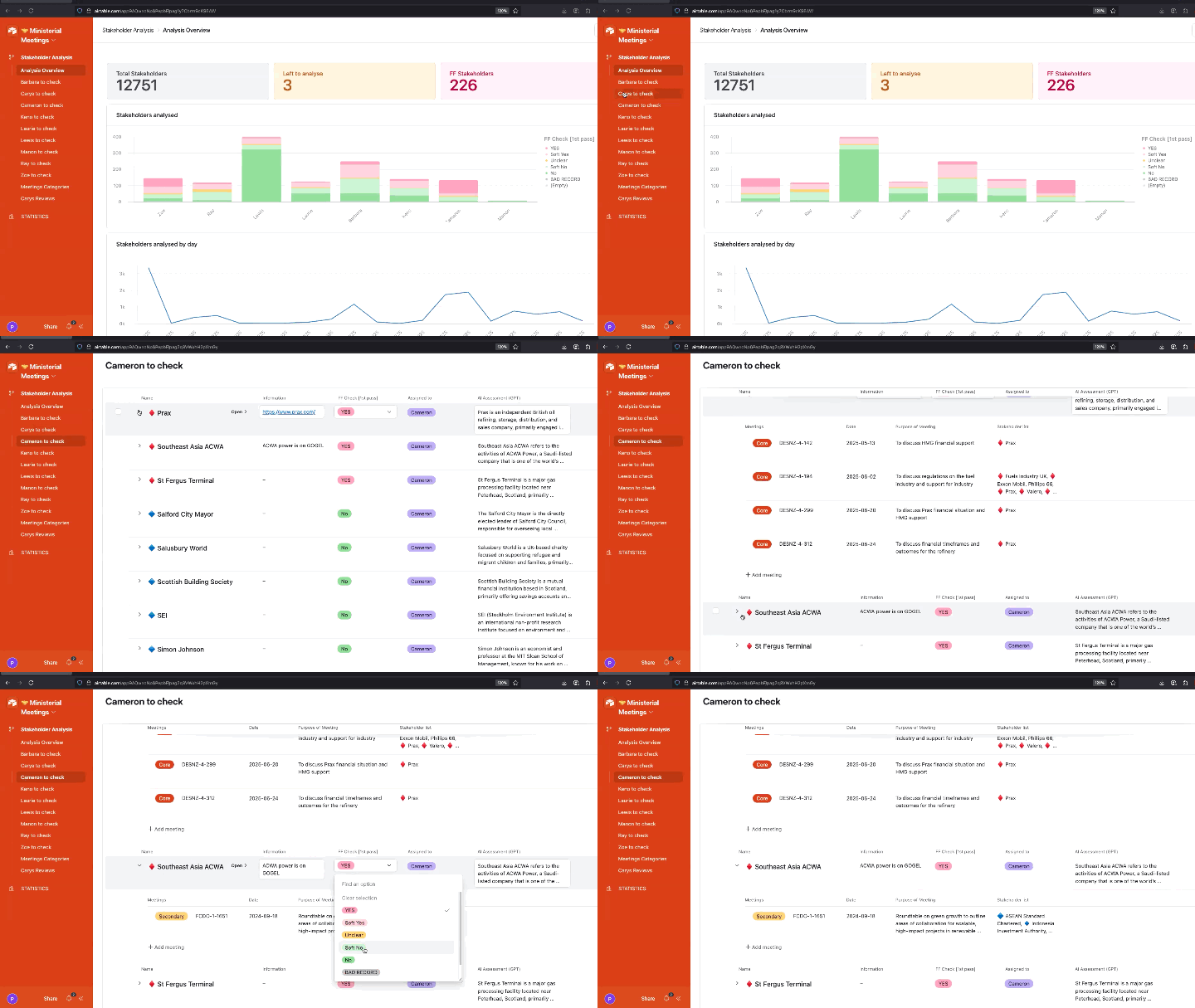
The human-review interface on Airtable.
The payoff
The system worked. After weeks of coordinated effort combining AI efficiency with human judgment, we had definitive proof of fossil fuel influence in the Starmer Labour government.
The result of this incredible effort was identifying 119 fossil fuel stakeholders, who had a combined 506 meetings with the UK government – more than two every working day. Some key stats we were able to determine:
-
The fossil fuel industry muscled in on 48% more ministerial meetings in Labour’s first year in government than in 2023, under the Conservatives.
-
The Department of Energy Security and Net Zero (DESNZ) met with fossil fuel lobbyists 274 times. Almost a quarter of all meetings had an industry representative present. DESNZ met with union representatives only 61 times.
-
Ed Miliband (DESNZ Secretary) met with fossil fuel industry representatives 91 times. A third of all of his meetings had an industry representative present.
-
BP, Shell and Equinor scooped a combined 112 meetings with ministers.
-
Fossil fuel lobbyists attended almost every government meeting about the Energy Profits Levy.
These weren't just numbers – they were evidence of systematic industry access that far outweighed representation from unions and environmental groups combined.
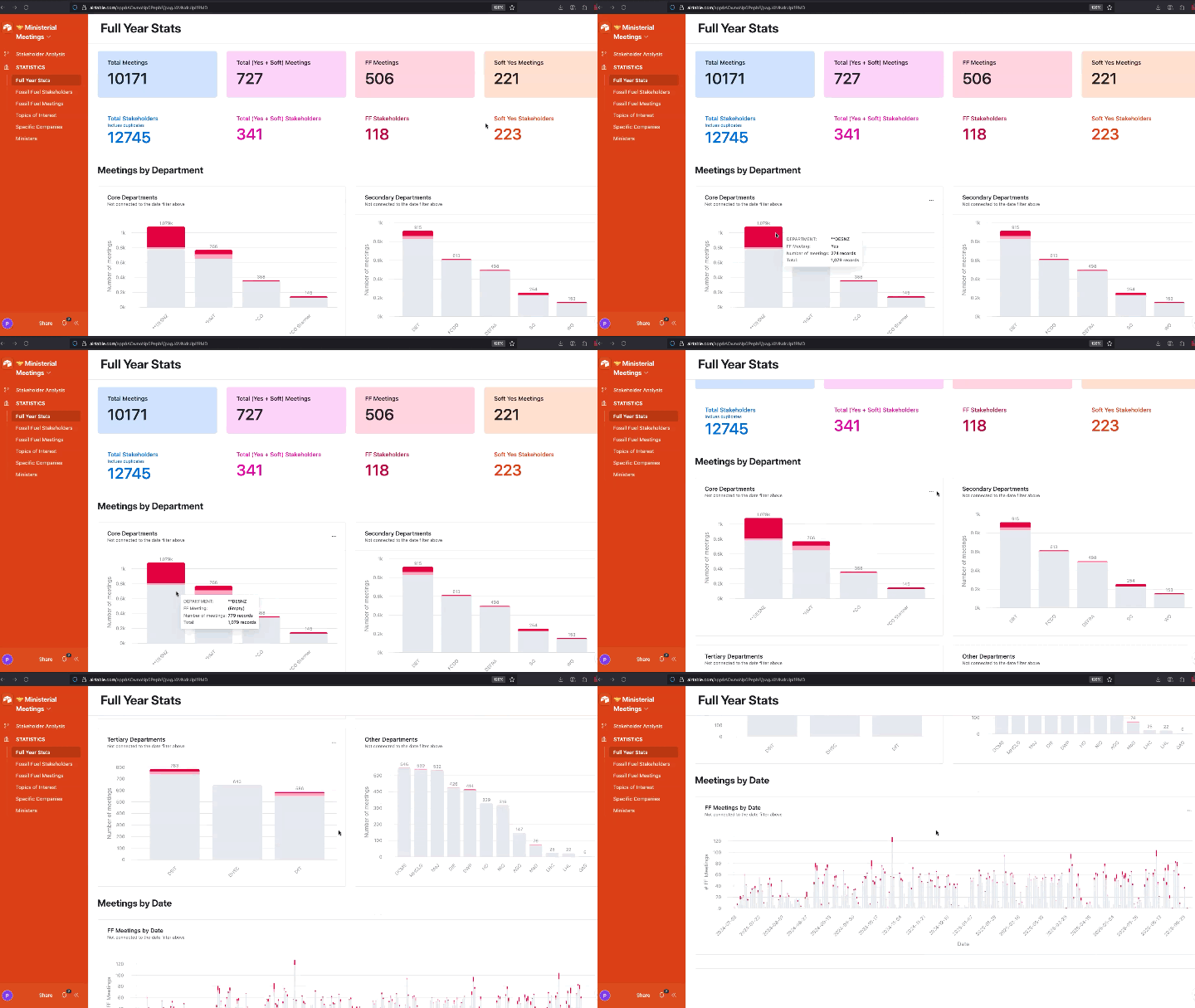
The analysis dashboard.
For our 12 topics of interest, we were able to determine how many meetings there were and break them down by whether or not there was fossil fuel representation in those meetings. We also overlaid any meetings with unions that are part of the Trades Union Congress, as well as key NGOs (mostly members of the Climate Coalition).
Perhaps most revealing was our analysis of Carbon Capture and Storage (CCS) meetings. Of 52 total meetings on this topic, 35 included fossil fuel representatives—but only 6 included union representation. This disparity helped explain Labour's controversial £22 billion CCS pledge, which followed this surge in industry lobbying. The data told a story the government would have preferred to stay hidden.
We were able to get press in the Guardian about this story, which you can read here.

In Carys' words...
This work would not have been possible without Ajaya; their sharp mind for data processing and dextrous use of Airtable led to the development of a system that enabled us to quickly and accurately categorise the vast number of stakeholders and subjects.

A final word from Ajaya...
This project demonstrates how purpose-driven organisations can leverage AI and smart automation to punch above their weight. With the right technical approach, a small volunteer team can conduct analysis that would typically require a newsroom's resources – turning transparency data into accountability.